
Single-Issue | Bipartisan | 501(C)(4)

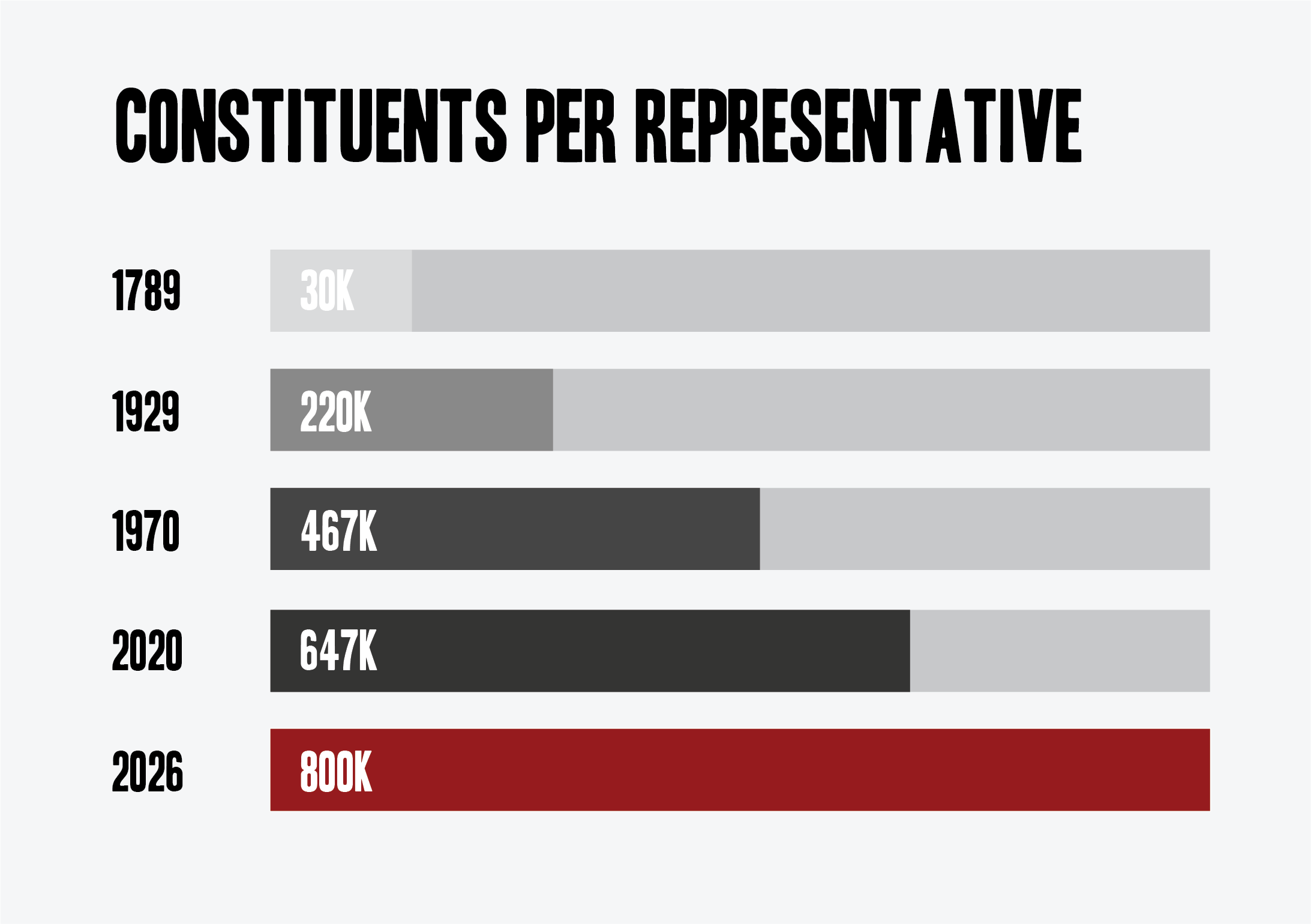
The House of Representatives has been capped at 435 seats since 1929, while the population tripled. One representative now speaks for nearly 800,000 Americans. It’s time for a change.
Why, in a country of over 330 million people, do we have only 435 representatives to serve them? Watch Mr. Beat explain.
The media is buzzing about Representation
New York Times | Washington Post | FiveThirtyEight | The Atlantic | TIME | Pew Research | The Hill | The Dispatch
Self-Government. Your Voice. Email your Rep. Now!
Use our form to email your rep. We have provided a template, but feel free to explain why you believe we should uncap the house.
We are a bipartisan movement — Republicans, Democrats, and Independents united by one belief: that Americans deserve a government that actually represents them.
Join the Coalition.
Why 435?
Why does your representation matter?
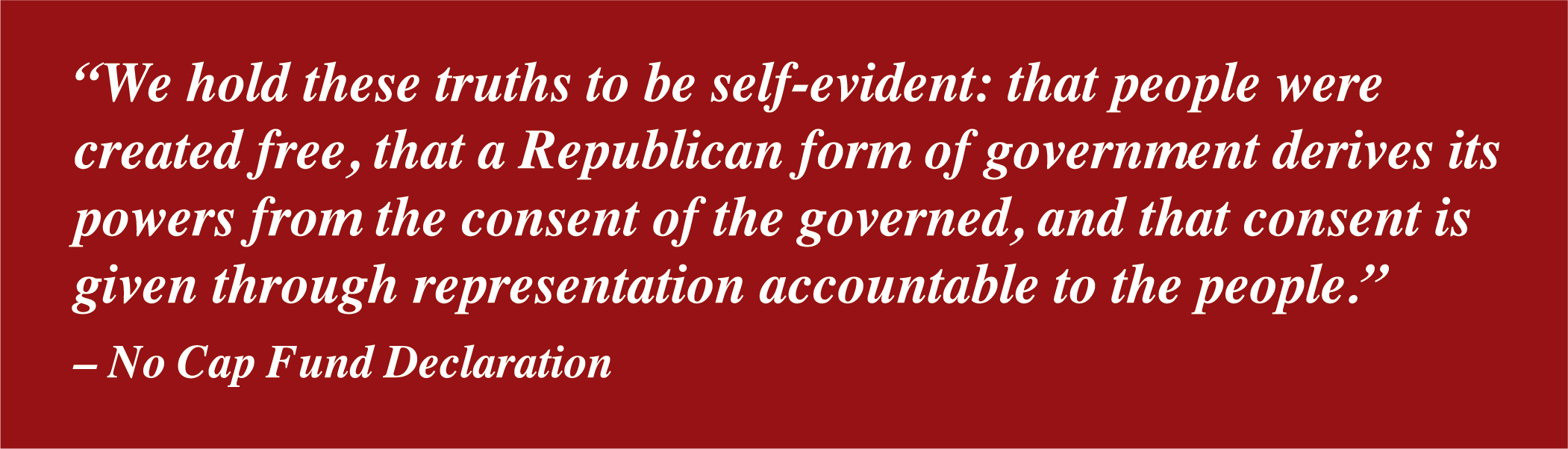
At the founding, George Washington made his only recorded intervention at the Philadelphia Convention — arguing the ratio of representatives to citizens must not be too small. The Convention settled on 1 per 30,000.
In 1929, Congress arbitrarily froze the House at 435 seats. The population has since tripled. The result: a House disconnected from the people it was built to serve.

What the Experts are saying
No Cap Swag

The No Cap 16 oz tumbler is perfect for that late-night coffee while reading the apportionment debates of the 1920’s.
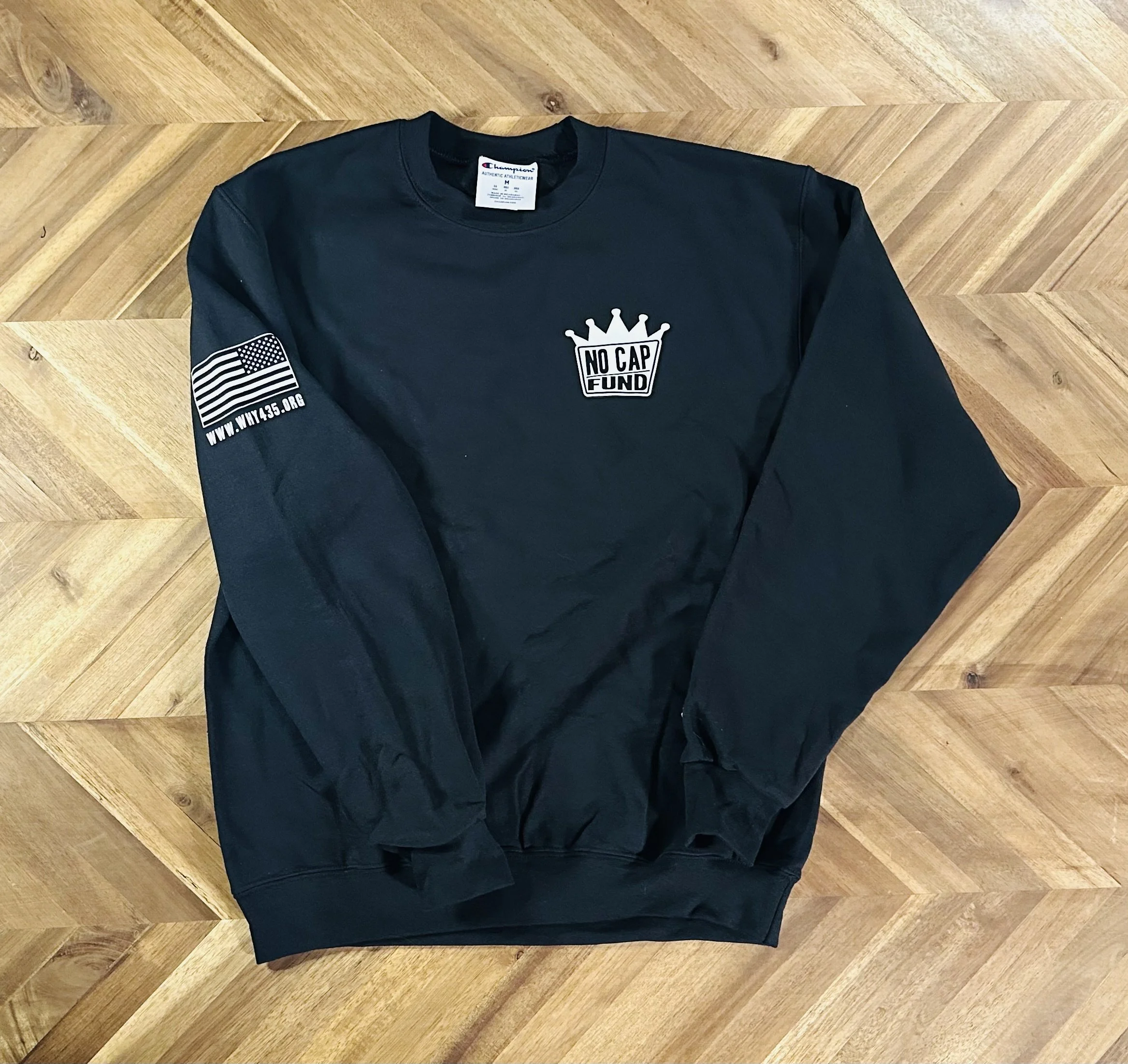
The No Cap Powerblend® Crewneck Sweatshirt delivers classic comfort with modern performance. Made from a durable 9-ounce cotton/poly blend, it offers a soft, warm feel designed to last. Double Dry technology helps wick moisture to keep you comfortable, while rib knit cuffs and hem provide a clean, structured fit. This reliable everyday sweatshirt will keep you warm and comfortable while sharing the word about Representation.
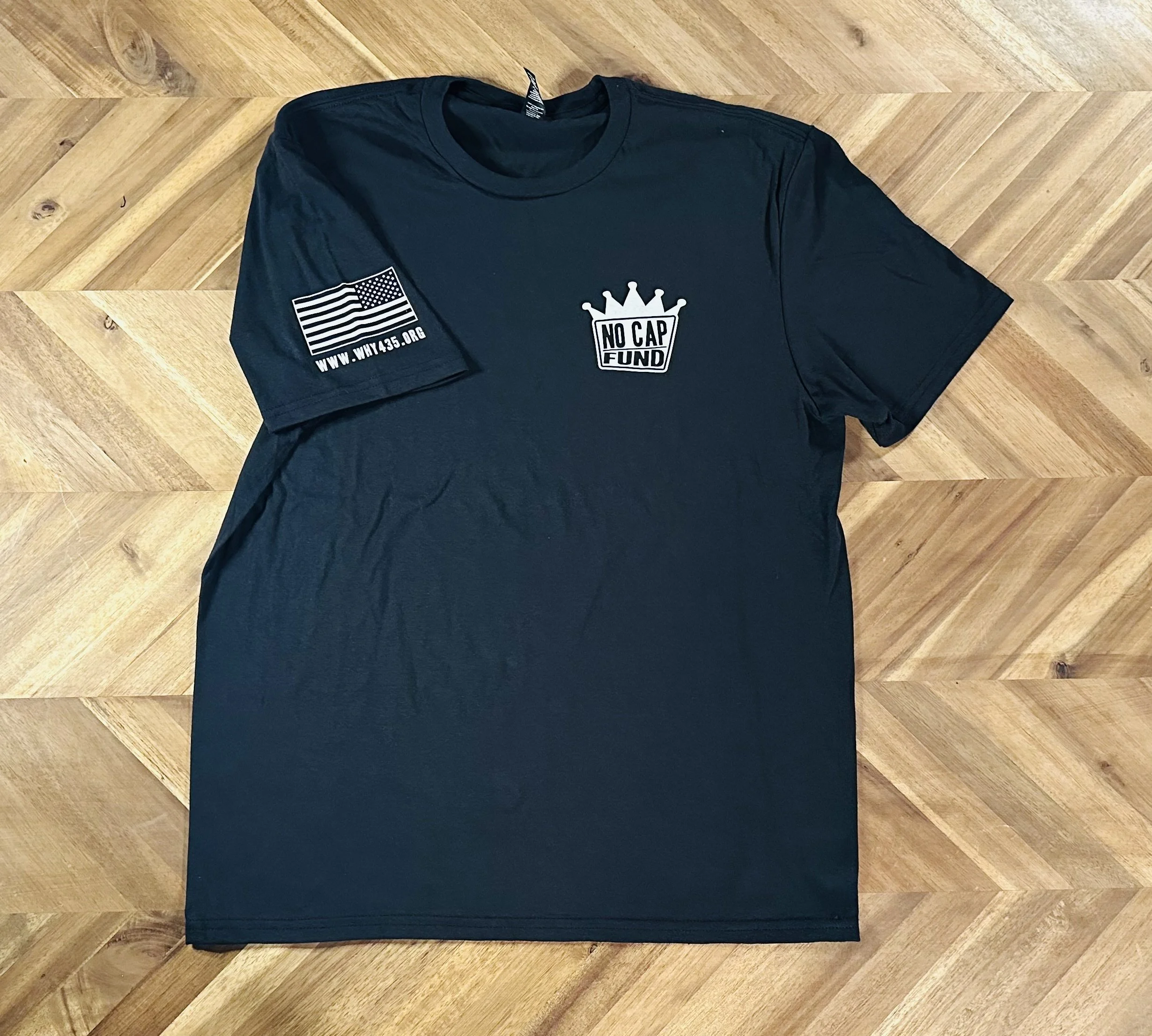
The No Cap CVC Tee delivers everyday comfort with a premium feel. Made from a lightweight 4.3-ounce combed ring-spun cotton/poly blend, it’s exceptionally soft, smooth, and built to hold its shape, offering a clean, modern look. A true go-to tee for the citizen looking to have a voice in their government.

Ask Congress to do its job. With this soft tee, you’ll look good, feel comfortable, and send the right message to restore representative government.
The No Cap Team
-
![A man with dark hair, glasses, a mustache, wearing a gray suit, a striped shirt, and a yellow tie, posing against a plain light background.]()
Walter Clapp
Founder - VP
Walter is an attorney, entrepreneur, and inventor. Walter first learned about our lack of Representation and the failed First Amendment while clerking for the U.S. Senate in his last year of law school. He believes, as did George Washington, that freedom of speech must be used to elect good and adequate representation in our House. -
![Young man with brown hair smiling, wearing a gray blazer and a collared shirt, in an outdoor setting with blurred background.]()
Landon Glover
Co-Founder
Landon is an entrepreneur and lawyer. Landon’s interest in the size of the House started as intellectual curiosity and quickly turned into a dedicated project when he started the @uncapthehouse Twitter (now X) and subreddit in 2020, which he still runs. Since then, the pages accumulated thousands of followers. He co-founded the No Cap Fund to take the effort to uncap the House to the next level and accomplish the stated goal of uncapping the House by 2029, the 100-year anniversary of the cap on the House.
-
![A smiling man with glasses and a beard, wearing a black jacket, standing in front of a decorated background with lights and ornaments.]()
Jeff Mayhugh
President
Jeff Mayhugh is a Christian, husband, and father of five. After building a small business and a family, Jeff decided to dig into history. He discovered the problem of the capped House, and he decided to get involved, volunteering for local campaigns and running for office. He is a contributor in The Hill, Newsweek, and The Blaze. Follow Jeff on X @jmayhugh28.
-
![Close-up of a smiling man with a beard, wearing a suit and tie, indoors with a decorative background.]()
Roger Scott
Treasurer – Board Member
Roger Scott has served for more than thirty years in various finance, accounting, and strategy leadership roles for some of the largest, most well-known firms on the planet, including AT&T and FedEx. Roger currently operates as a consulting accountant, serving as fractional CFO or Controller for client companies across the country. He has been married for 35 years and is proud to claim parentage of two adult children. -
![A young man with brown hair in a suit and tie smiling outdoors with greenery in the background.]()
Thomas Howes
Board Member
Thomas D. Howes is Editor-in-Chief of The Vital Center, founder of the Reagan Caucus and Reagan Caucus Action, and a lecturer in politics at Princeton University. He is co-authoring, with James M. Patterson, a book to be published by the Acton Institute titled Why Postliberalism Failed. He also has a nearly completed manuscript defending constitutional democracy from the perspective of natural law theory.
-
![Man with glasses holding an American flag and a small plush toy of a historical figure, smiling against a neutral gray background.]()
Matt Beat
Board Member
Matthew Beat, also known as Mr. Beat, is a multifaceted creator from Kansas—a YouTuber, video producer, educator, and musician. With experience teaching a range of subjects from grades 7–12, Matt has expanded his classroom to a global audience through his YouTube channels Mr. Beat and The Beat Goes On, collectively gaining over 1 million subscribers and over 350 million views.






The Representation Station is our flagship show dedicated to exploring representation and political reform.FAQ
-
Uncapping the House means repealing the Permanent Apportionment Act of 1929. The act was written at a time when our population was booming. After the 1920 census, which was the first to record more than 100 million people, and the first to record more people living in urban areas than rural ones, Congress struggled to write a new apportionment bill. The combination of a shifting and growing population created friction in the process. Some states were worried about losing representation, and other members were concerned about the effects of immigration on representation. Others thought the size of the House was already too large and unruly, having argued about it since the 1890s.
Since the cap in 1929, the population has tripled, making what was once a large, representative legislative body a very small, unrepresentative one compared to the population it serves. This is a major reason the system feels broken. With such a small legislative body, each member’s power is greater, and each citizen’s vote is less influential. The distance between the citizen and the representative strains communication and makes it harder to hold the representative accountable if they fail to fulfill their responsibilities.
-
Yes. But it would require modernization and reconfiguration.
As noted in an article in The Washington Post, Danielle Allen has explained that the current size of the House chamber reflects 20th-century choices, not constitutional limits. The chamber was last expanded in 1913, and the permanent cap of 435 members dates to 1929, when the U.S. population was less than one-third of today’s.
The United States Capitol has been repeatedly renovated and expanded over time, including the addition of office buildings and underground facilities. Options to accommodate a larger House include:
Reconfiguring seating layouts
Using electronic voting and updated chamber design
Modifying the House floor footprint
Conducting some proceedings through hybrid or remote systems
In short, yes, but with some reengineering.
-
It depends. Because we are a 501(c)(4) and not a 501(c)(3), contributions or gifts to the No Cap Fund are not deductible as charitable contributions for individual federal income tax purposes.
But, your contributions may be deductible as a business expense under section IRC 162. Please talk to your CPA to learn more about your options. No Cap Fund does engage in limited lobbying. For FY 2025, 10% of any contribution is nondeductible, and 90% is deductible.
-
No Cap Fund does engage in limited lobbying (see the above FAQ!). Most of our lobbying, and all of our political expenditures, however, occur through the “separate segregated fund” we maintain for “exempt functions” as defined by IRC 527(e)(2). That fund is referred to as that No Cap PAC and is in its infancy. If you want your funds to go strictly to lobbying and political expenditures, please visit and donate at the No Cap PAC!
-
Our initial funds are educating and engaging with more Americans., including our grassroots action network.
We are
A 501(c)(4) incorporated in Wyoming.